
Long race was really challenging, and many legs made runners stop and think. And it was surely worth. Green terrain constantly brings risk to lose understanding and therefore to run a little more than necessary.
The leg I was really excited about at the Long – the 6th leg in the women’s A final, right after the spectator passage.
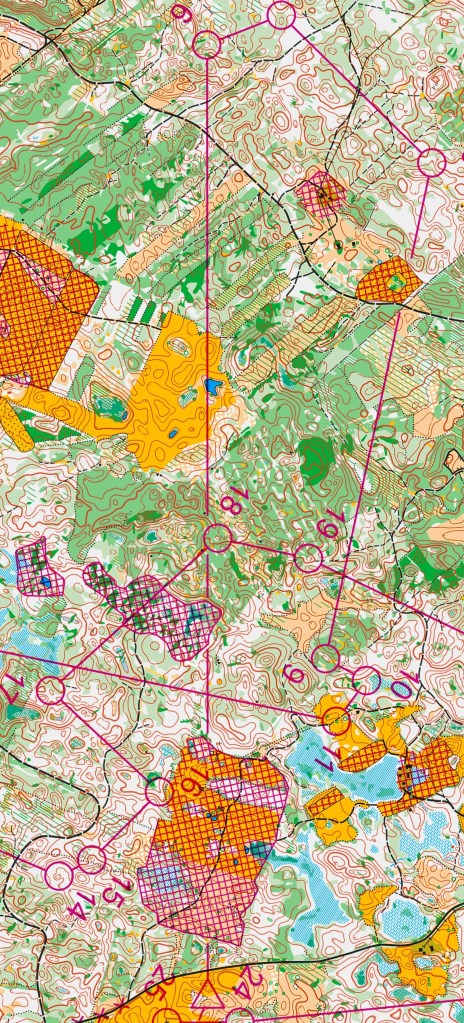
Unlike the corresponding leg in the men’s course, this leg doesn’t have a viable option via the asphalt road, and that made the leg very challenging! Runners needed to build up their routes using some other, sometimes unclear objects.
And now let’s go through this leg and try to see what they were actually choosing between.
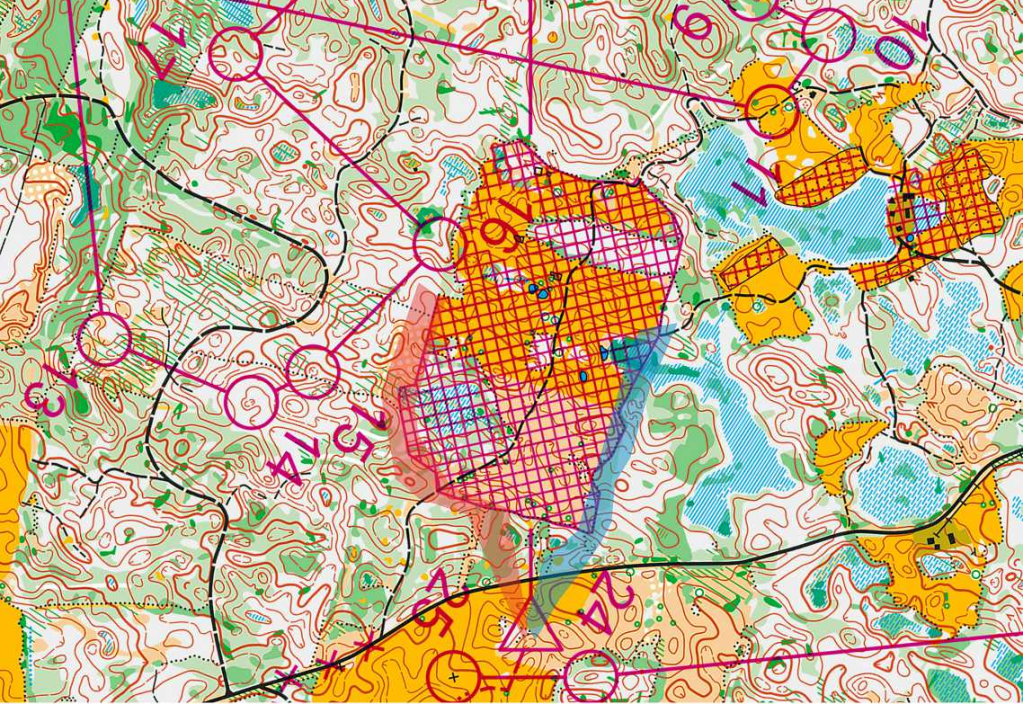
At first, the beginning of the leg looks quite obvious.
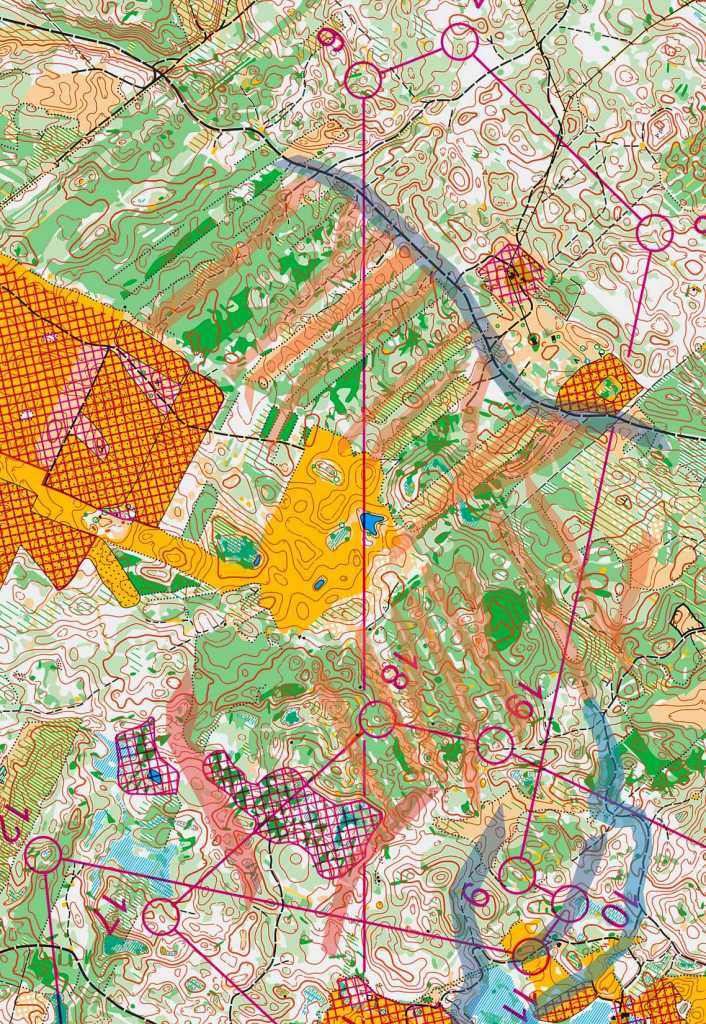
The forbidden area offers a choice between going left (red highlight) and going right (blue).
Then, the left option splits into two, going around another forbidden area.
On the right side, there are at least three suitable paths/open areas that can be used.
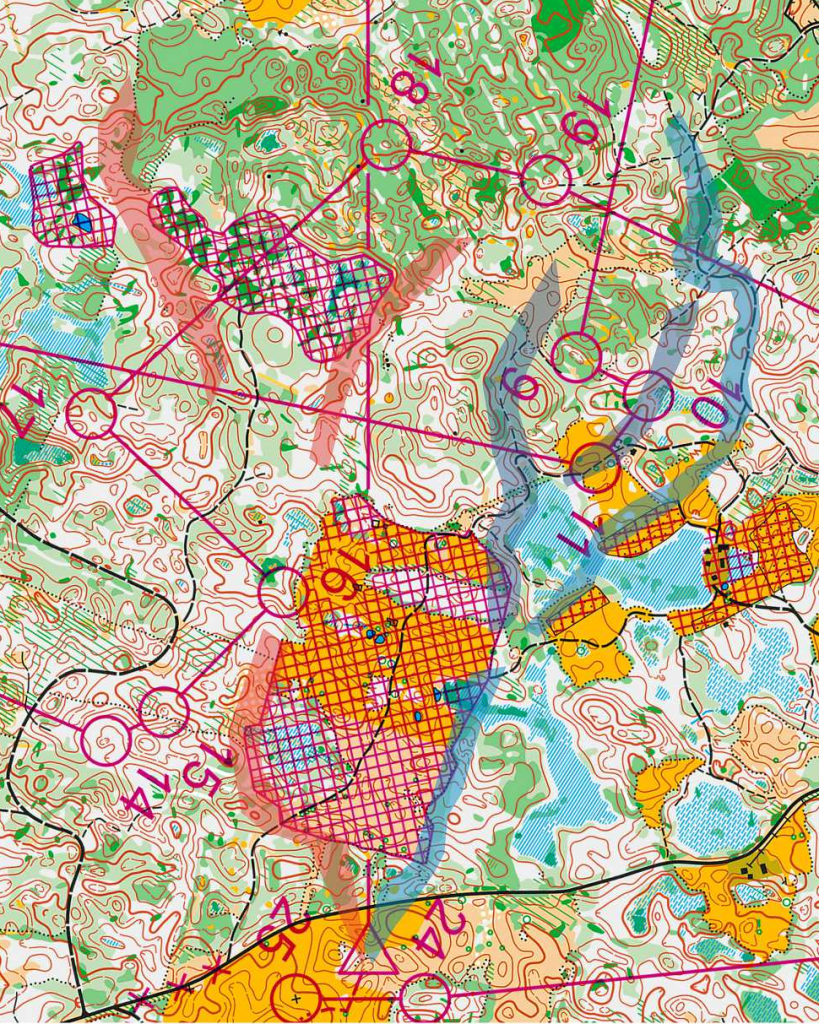
But at the next section it is easy to get emotional.
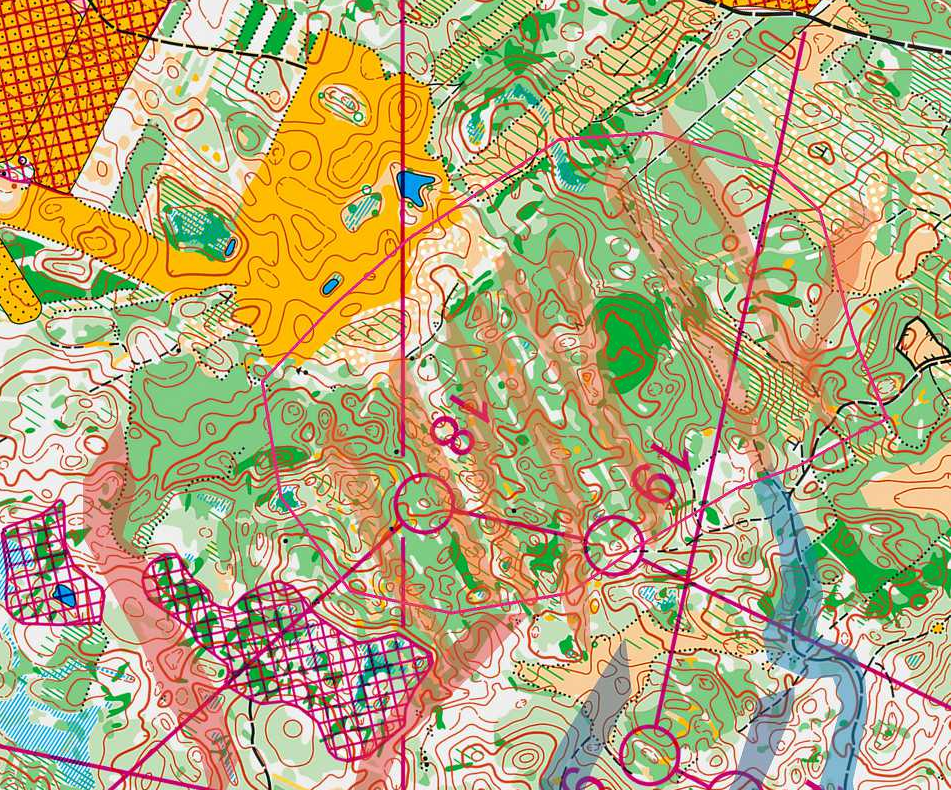
From this point on, all the clear lines are gone.
Instead, you have to choose between lots of discontinuous white and yellow passages in a large green area. And not one of them is clearly better than the others.
At this point the number of options for this leg gets already quite large.
And this is the moment when it is probably easy to feel tempted not to choose anything at all and just go…
Before reaching the main artery – big road (blue highlight), there is another big green area with the same broad choice of passages.
The direction of the passages is perpendicular to the big road, so it is important to look for possibilities to shortcut the corner through the green.
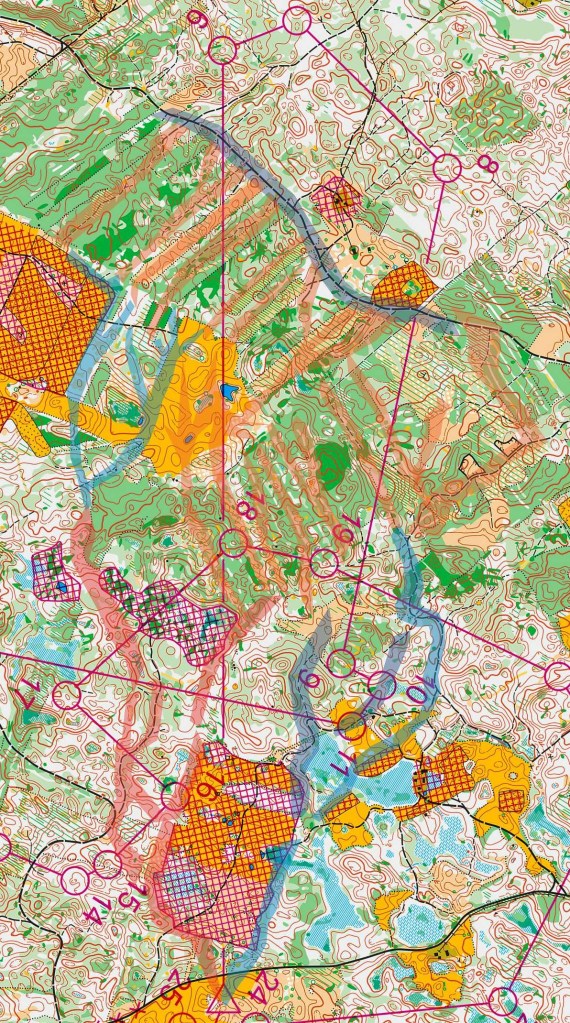
After connecting the pieces roughly, we can see how many route options this leg was actually offering. Wow!
Being in a rush to pick something and go means losing the opportunity to choose a good option. But the time available for thinking is not unlimited either.
Here is the moment when your mastery begins to work for you: the ability to process all this information, search for, find and immediately evaluate so many options in order to build a good route choice – all in seconds and under pressure.
How do you sort all this out so that you can compare the options?
Let’s start from the right side of the leg:
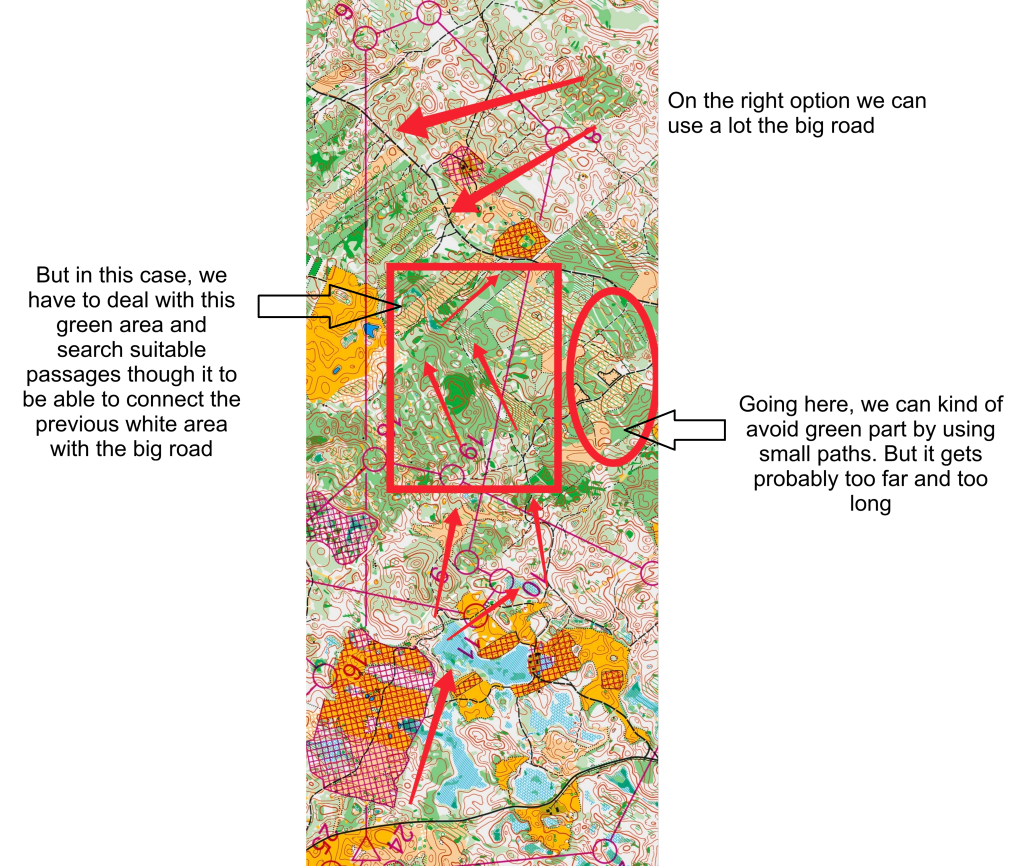
On the straight route we can get other type of advantages:
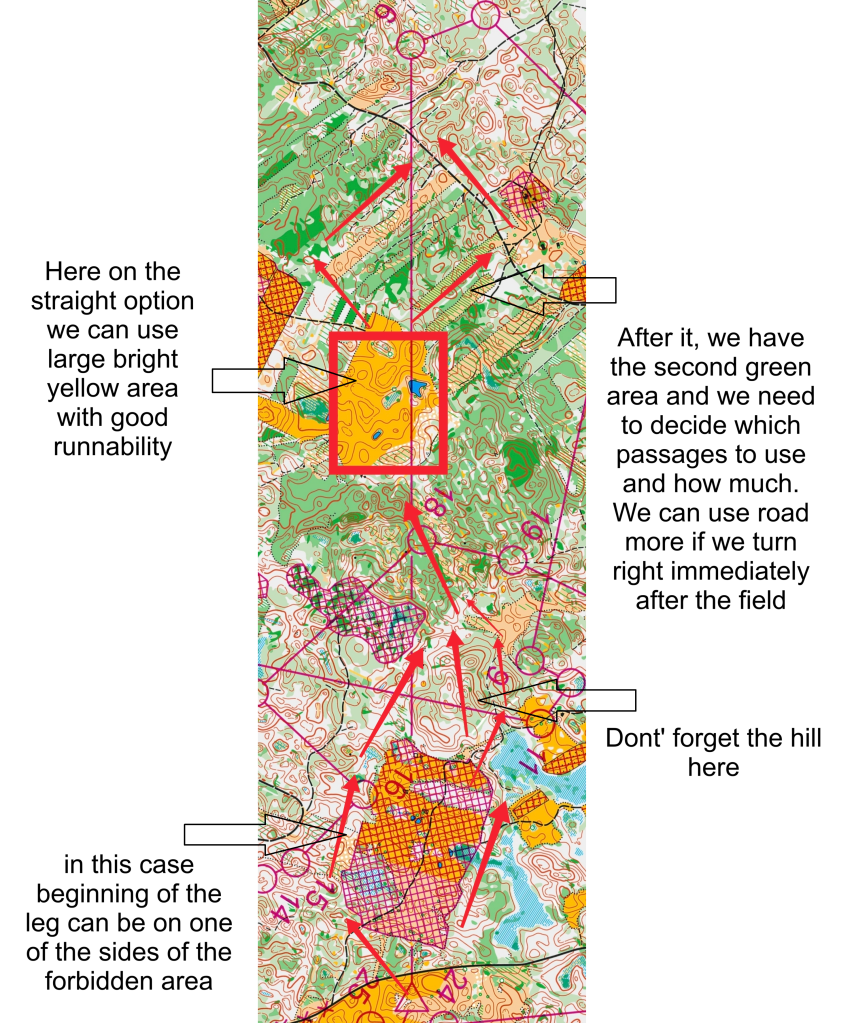
Finally the left options:
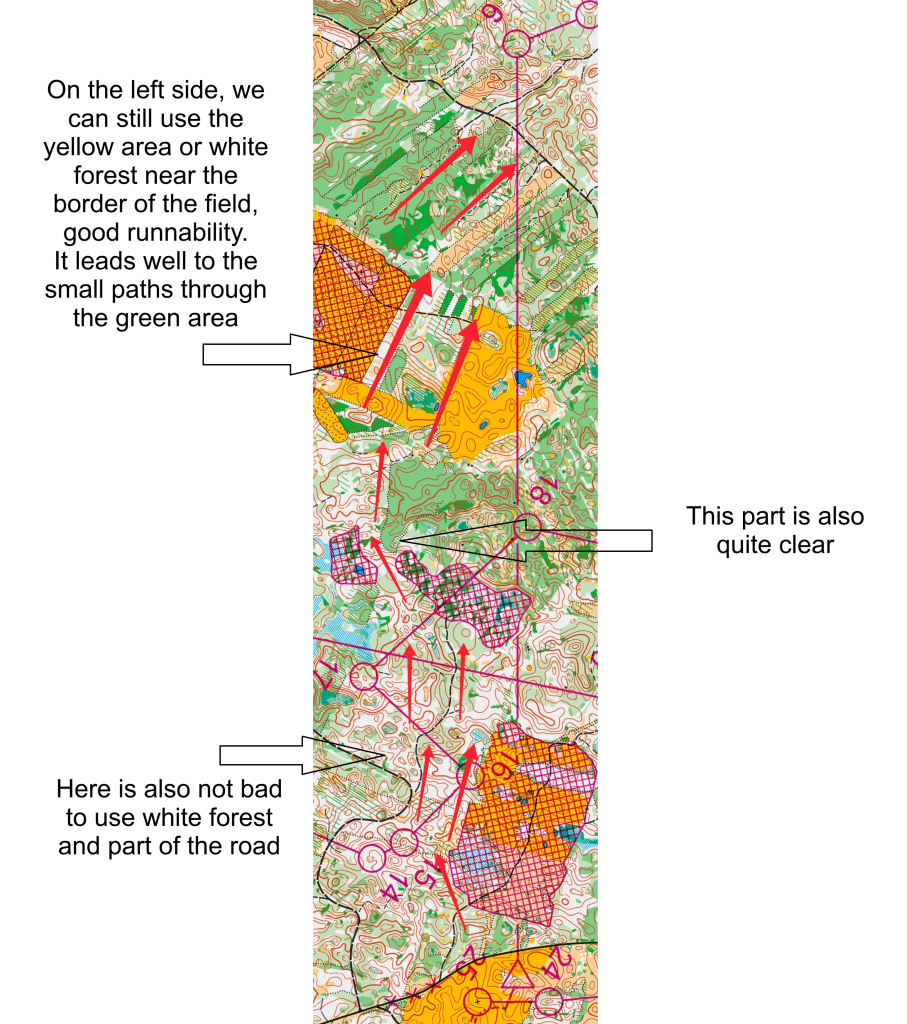
Getting ready to make a choice?
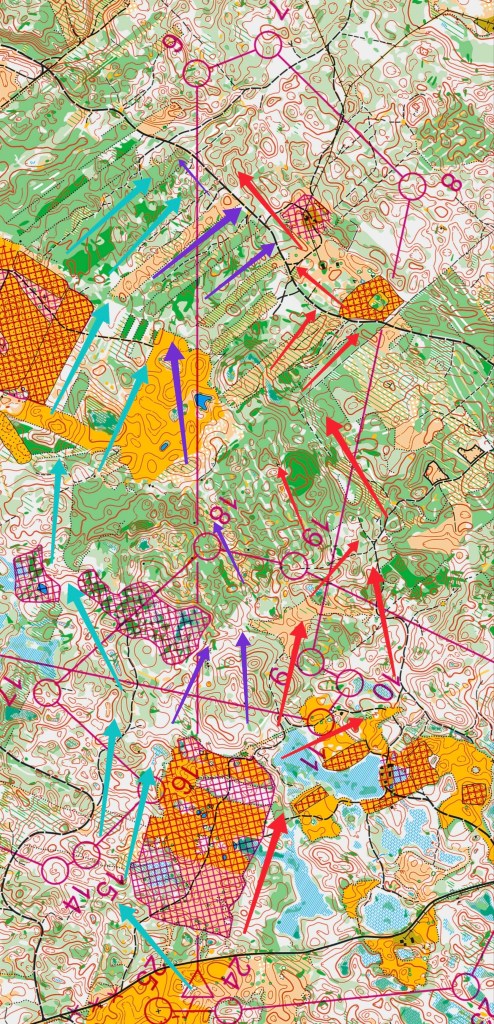
Once the options are built, the second part of the mastery begins: perceiving the runnability, length and obstacles along each option correctly, and giving yourself just one answer: “Which one is going to be the fastest FOR ME?”
Remember: everyone has different strengths, so the route that is best for one runner is not necessarily the best for another.
One runner may prefer to take some climb or cross the green and go straight, while another may run very fast on the paths and therefore choose a more indirect route.
And you still need to EXECUTE your plan without mistakes.
Pick your OWN fastest route.
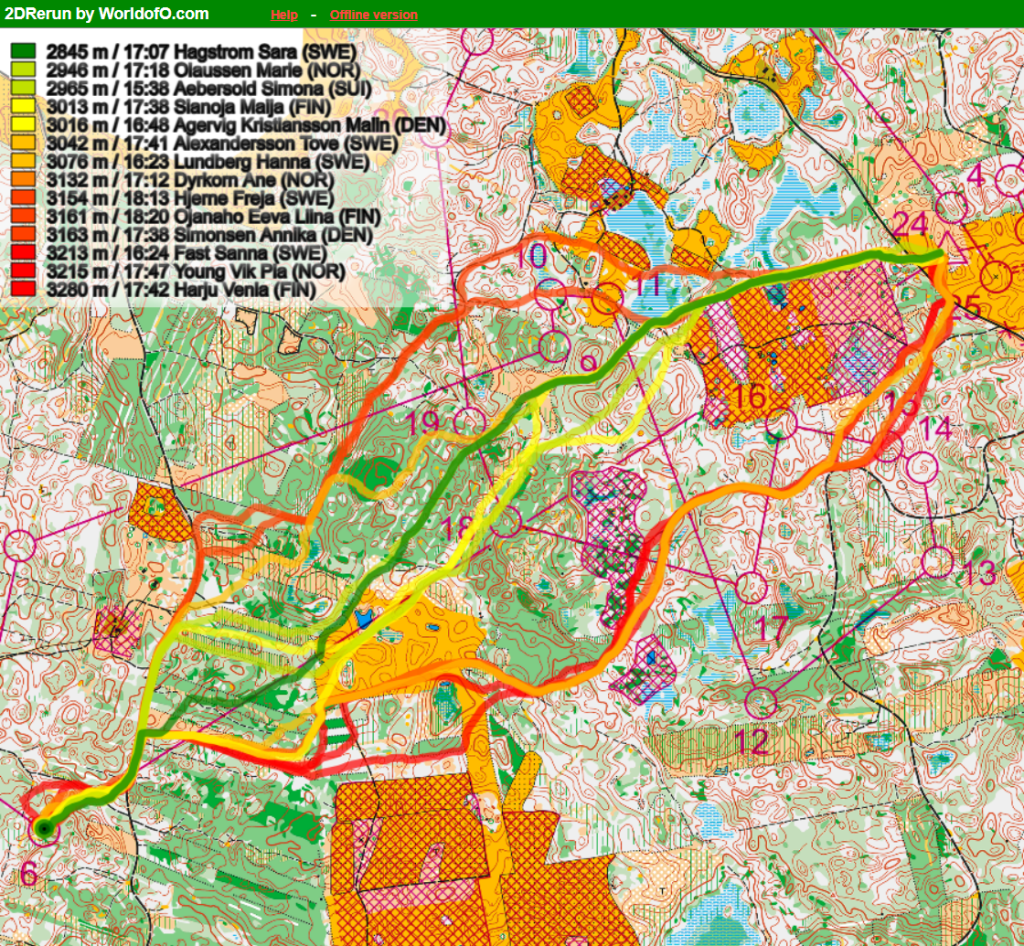
Here are some examples of what the runners chose that day! Legs sorted by length. But shortest doesn’t mean fastest.
This leg (and this terrain) is very much about nuances – small local route choices around green areas or steep shapes, good use of white areas, little paths and clever shortcuts can make your split time better.
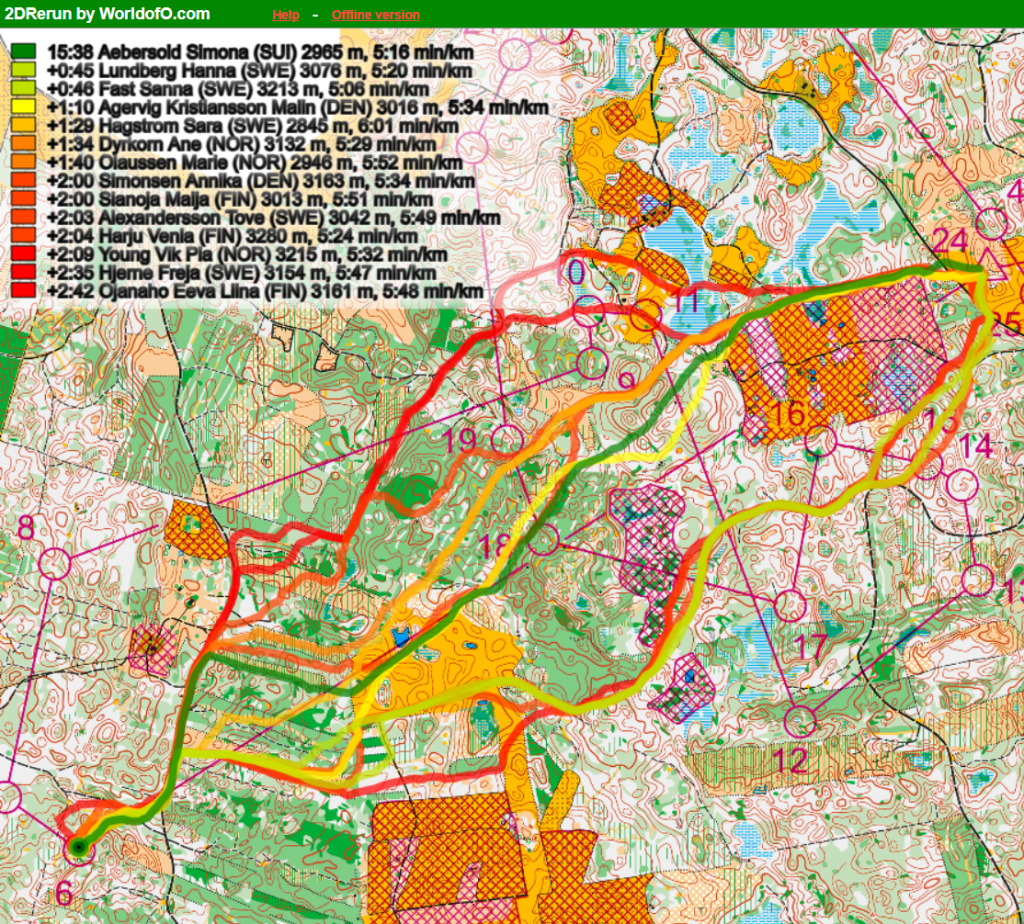
And this is already sorted by time. but this is not only the route itself that contributes to the leg time, but also time losses caused by problems with execution. Your fastest route is always the best combination of a great route choice and a great execution.
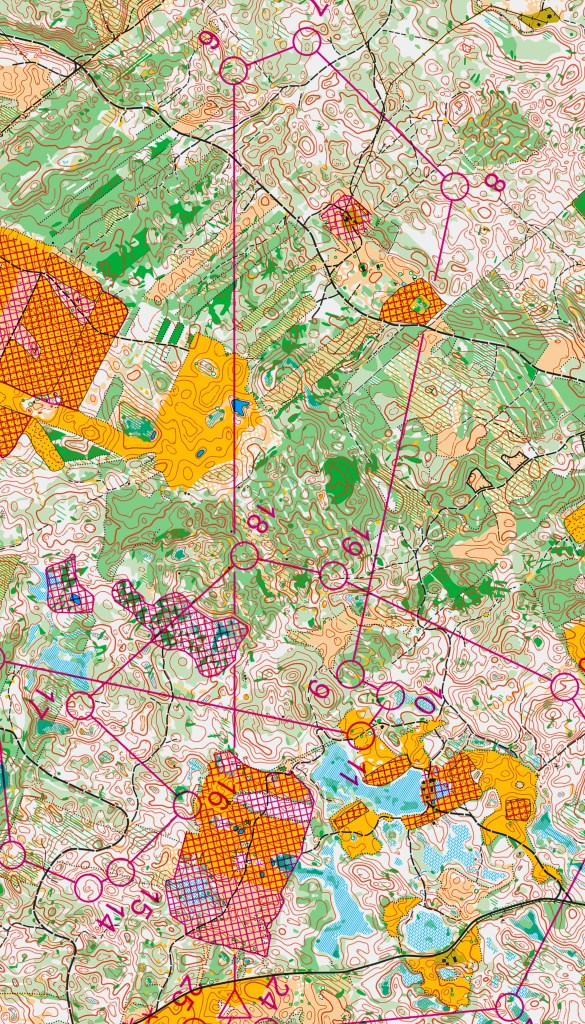
And now the leg again from the scratch. Where is YOUR best route?
What would YOU choose? 😉
Subscribe for more articles about o-technique!


Leave a comment