
Middle final was a technically demanding course in a really challenging green terrain in Druskininkai. Many legs were difficult but in
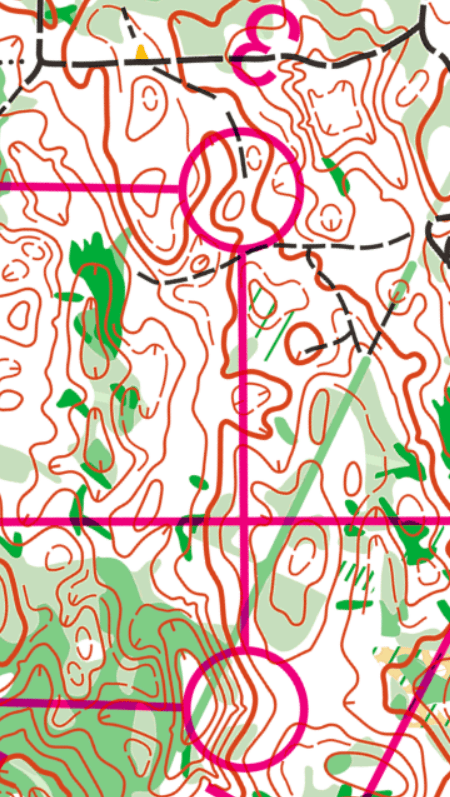
Leg 3 is one of my favorites of the men’s course. Despite of being quite short and looking easy and lineal, this leg is actually trickier than it looks like.
Many people lost significant time there.
Here in this article we analyse what was especially difficult in this leg and why, and try to build up the reliable route.
As the leg is not very long and actually doesn’t look specially difficult at the first glance, the most usual route choice for this leg could be something like this: to avoid extra climbing to the hill on the right side by going slightly left from the red line and then just right and get into the reentrance that leads directly to the control. But…
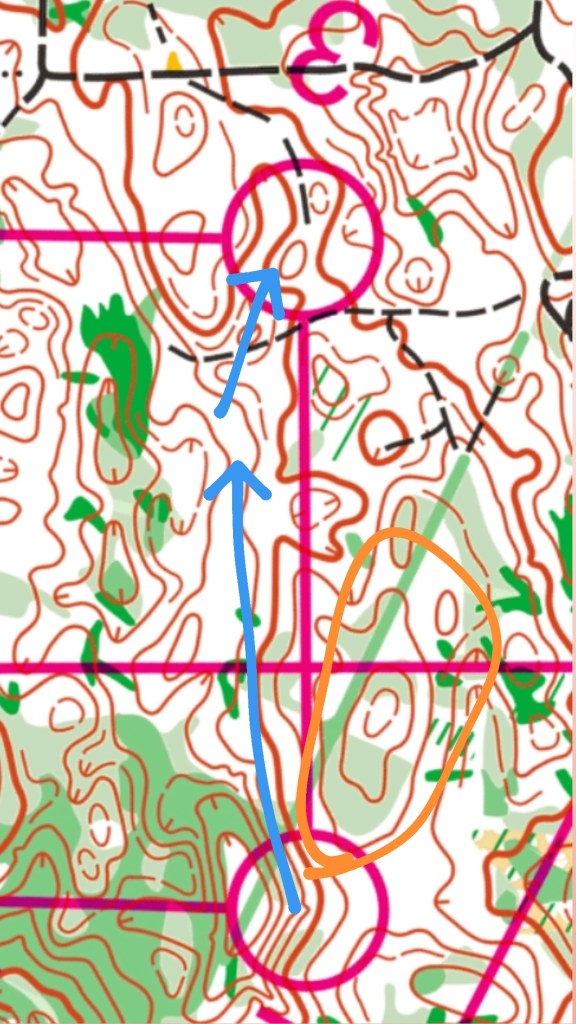
But here it waits the first trap.
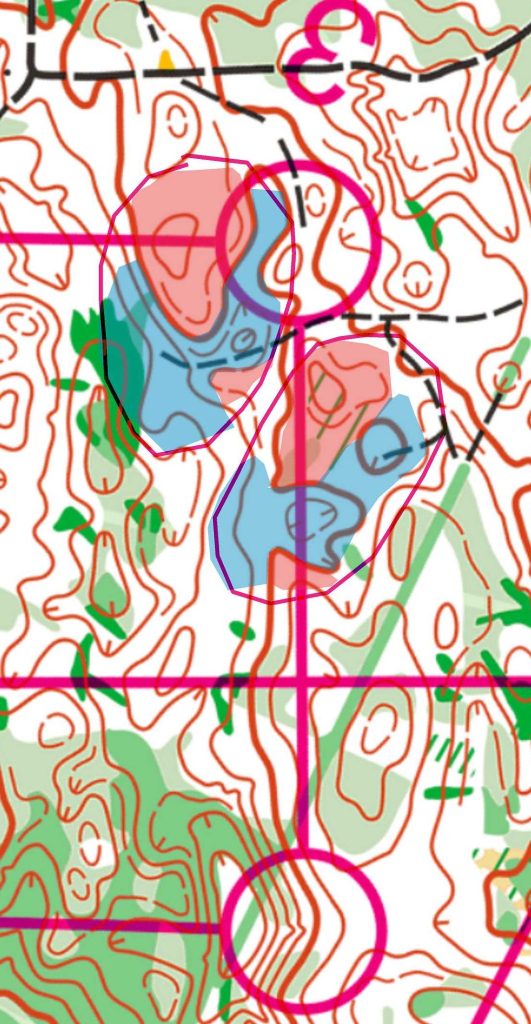
The parallel situation. Two reentrances of almost same direction, followed by a nose/hill. And to make it even more similar, both of them have a small nose of similar shape right before the reentrance.
Situation looks less similar on the map, but in the forest, in conditions of reduced visibility, it is extremely easy to mix one with another
So if you go just a little too high and a little too short (like the brown arrow shows), you get straight into the parallel reentrance.
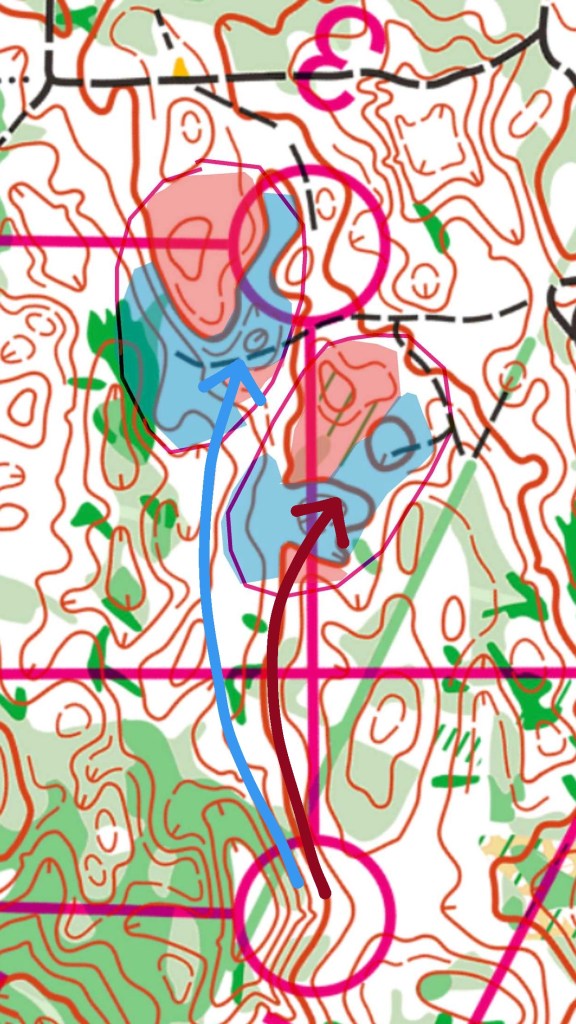
But this is not everything!
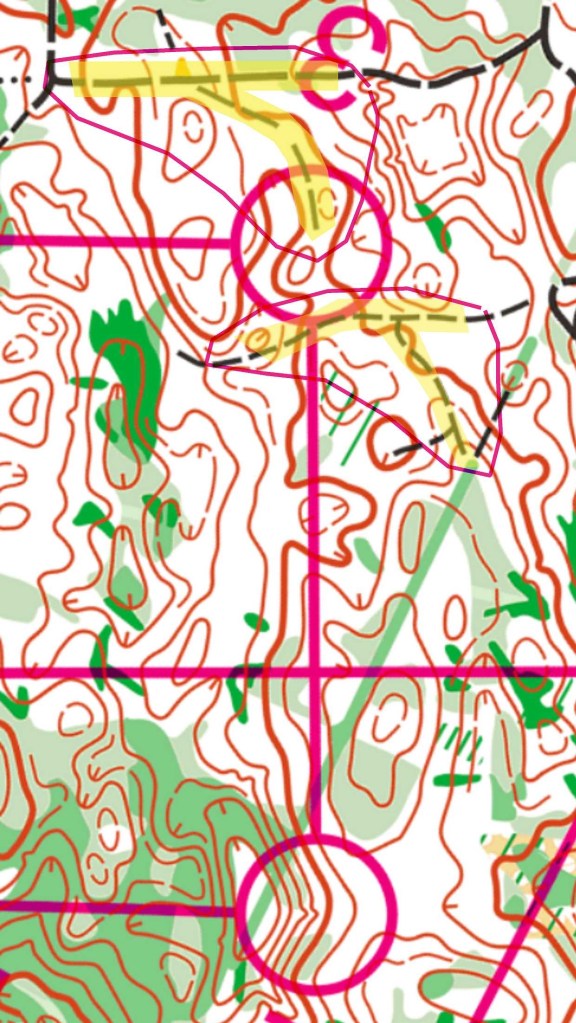
To make things even trickier, there is another parallel situation right after the first one: two almost identical situations with path forks. Paths have similar direction and even the hills around are situated quite the same way on both of them.
So if it happens that you relocate incorrectly after the first half of the leg, then there is a chance to get messed up also by the paths!
(Good job of the course setter, isn’t it? 😉
So what is the reason for the mistake here?
The problem is actually not because it is difficult to distinguish one the reentrance from another.
In reality, the trouble starts because of following the green unclear slope for 150-200m without anything that secures the arrival in the correct reentrance. Being in this slope, it is very easy to climb a bit too much or drop down, or just deviate from the necessary direction
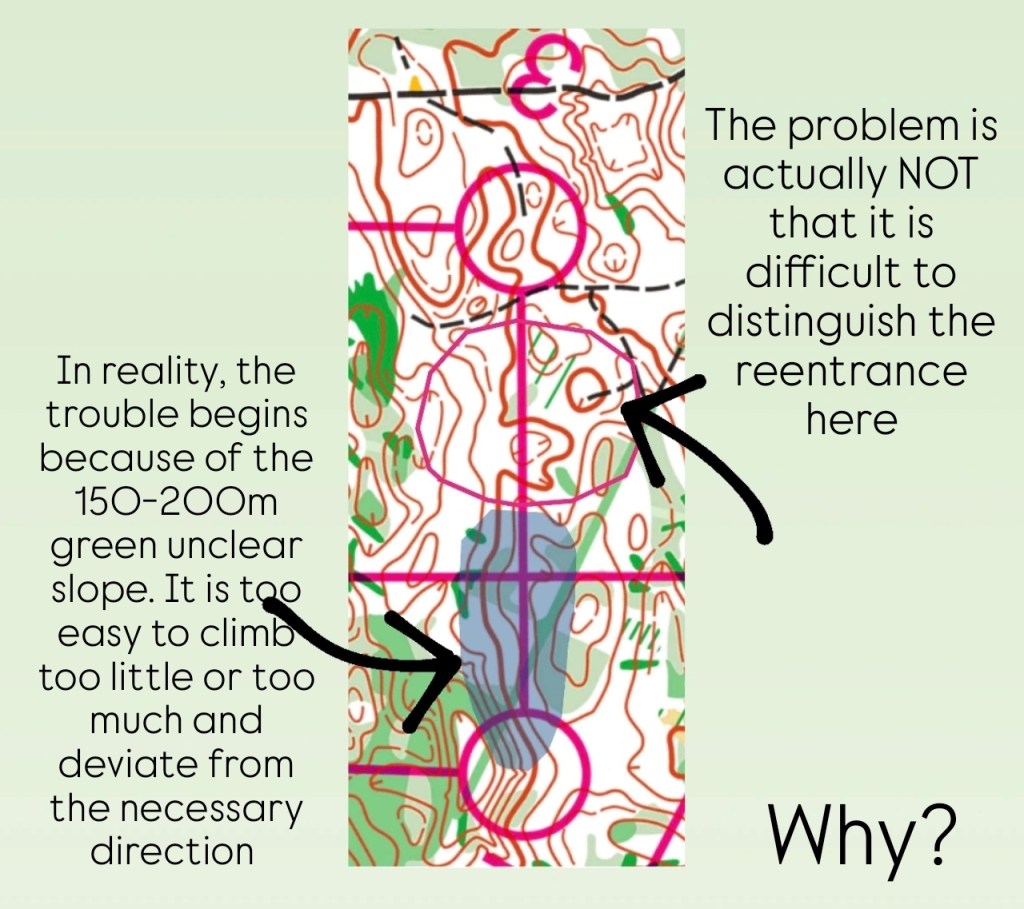
And why this happens? Why it is not working to run just along the slope?
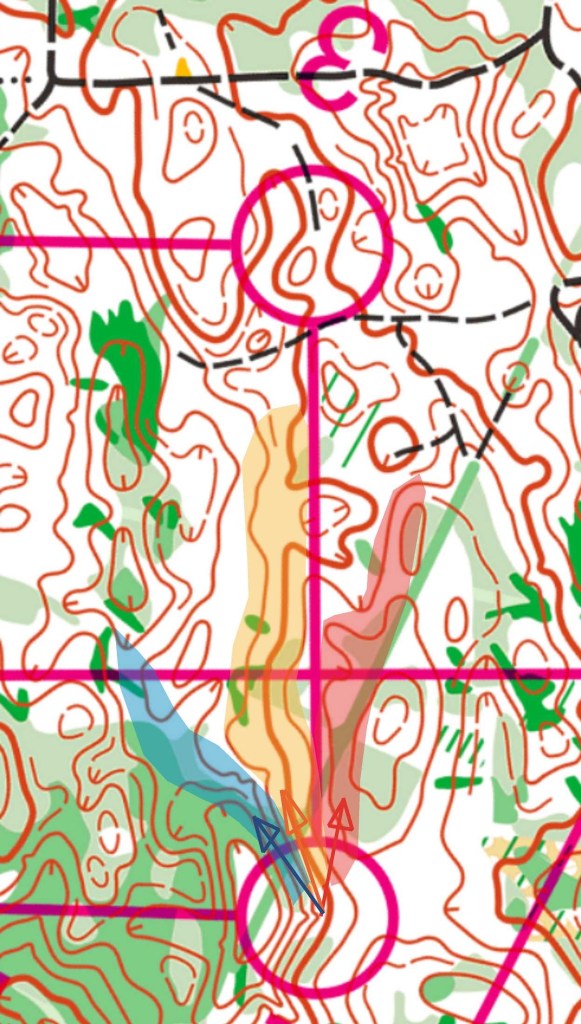
If we look at it a bit more in details, we can notice that it begins with a steep part (at the 2nd control) but then spreads to different directions.
The upper part (red) turns slightly to the right, and the lower part goes slightly to the left.
Depending on what is your direction out of the 2nd control, it is possible to accidentally get into different parts of the slope. And the low visibility won’t allow you to notice it immediately.
And then, after 150-200m of just following it without checking the direction, it is easy to appear in quite different places…
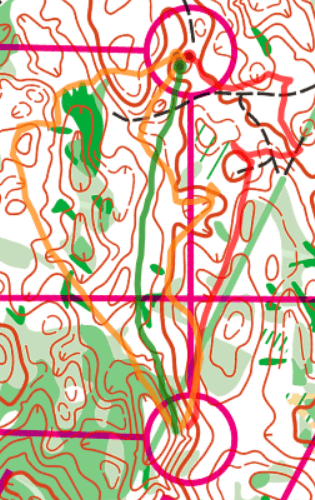
So what to do?
Of course, running EOC final, there is no time to search and predict parallel situations. But then how it is possible to not get into it?
The useful skill here: instead of just going through the green unclear area approximately and then relocating, build the plan which helps to always understand where your next necessary object is going to be.
This is a good example that not only makes the route reliable and safe, but also avoiding the extra climbing:
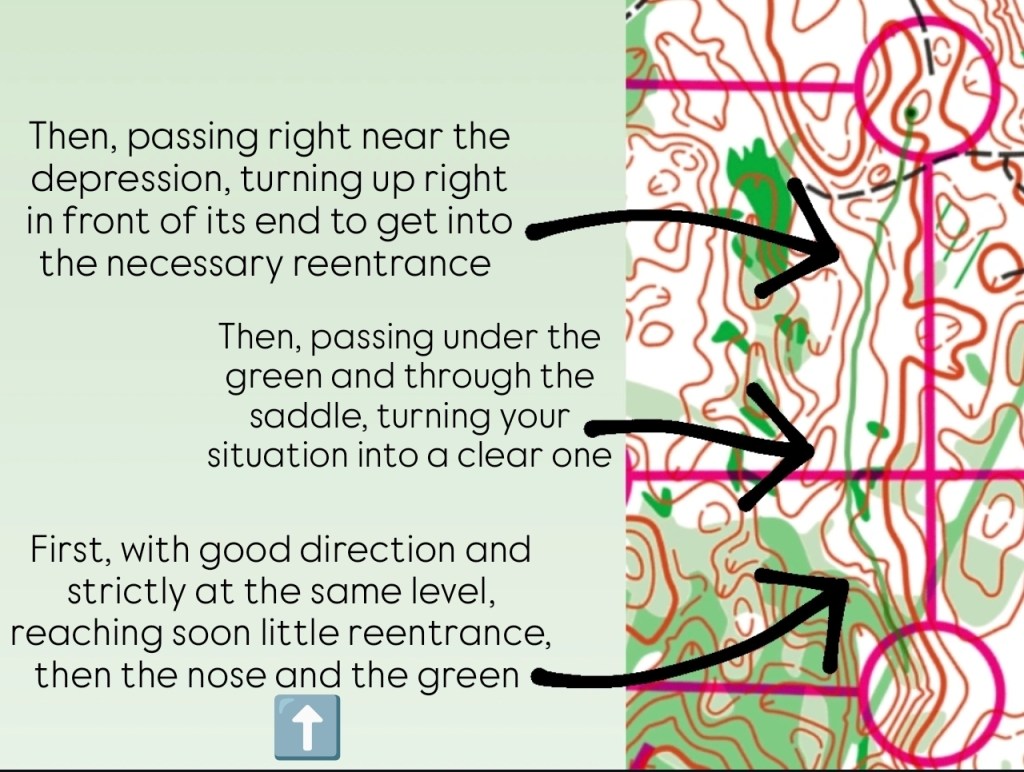
As I wrote in the previous article about the necessary skills in a low shape terrain, the route choice here is mostly about making it safe though the green unclear places rather than trying to save climbing
And what was the most challenging leg of the middle distance for you?
Subscribe for more useful information about orienteering technique!


Leave a comment